A great pair of jeans should make getting dressed simpler, not send you into the fitting room with three different sizes and more questions than answers. This women’s jeans fit guide breaks down the details that matter most, from a waistband that stays put to a leg shape that works with your everyday style.
Fit is personal, and the number on a label is only a starting point. Use this women’s jeans fit guide to assess comfort, proportion, and movement, then choose denim you will actually want to wear on repeat.
Women’s Jeans Fit Guide: Start With the Waist and Rise
The waist is the first place to check. Jeans should sit securely without digging in, rolling over, or requiring a belt to stay up. You should be able to sit, bend, and take a full stride without feeling pinched across your midsection or pulled at the zipper.
Rise is the distance from the crotch seam to the top of the waistband, and it changes both comfort and silhouette. A high rise typically sits at or above your natural waist and can create a defined, elongated look. A mid rise usually lands between the hips and navel for an easy everyday balance, while a low rise sits closer to the hips and can feel more relaxed when it is cut with enough room through the seat.
In this women’s jeans fit guide, the clearest rule is simple: choose the rise that feels stable on your body, not the one you think you are supposed to wear. Try on jeans while seated as well as standing, because a waistband that feels fine in front of a mirror may be too restrictive for a full day out.
Pay attention to the back waist, too. A small amount of contouring is normal, but a large gap often means the cut is too roomy at the waist or too small through the hips and seat. A different rise, a curvier cut, or a smaller waist measurement may solve the issue better than tightening a belt.
- For a quick fit check, place two fingers inside the waistband; it should feel close but not constricting.
- The zipper should lie flat without pulling open or forming horizontal tension lines.
- A high rise should not press uncomfortably into your ribs when you sit down.
- If the back waistband lifts away substantially, try a cut with more hip room before sizing up.
- Browse our jeans and denim collection with your preferred rise in mind rather than choosing by wash alone.
Choose a Leg Shape That Matches Your Style and Movement
Leg shape determines how jeans skim, hug, or move away from your body below the hip. The best option is not about hiding or correcting anything; it is about deciding where you want definition, ease, and visual balance. Start by noticing whether you prefer a close fit at the ankle, a straight fall from thigh to hem, or more volume through the lower leg.
When comparing straight vs skinny jeans, look at the space around the calf and ankle. Skinny jeans follow the leg closely from hip to hem, creating a sleek, fitted line that pairs naturally with taller boots, oversized shirts, and longer layers. Straight jeans have a more consistent width through the leg, offering structure without a tight calf or ankle.
This women’s jeans fit guide recommends moving through a few real-life motions in every silhouette. Walk, sit, squat gently, and step up as if you were climbing stairs. Jeans that pull sharply behind the knee, restrict your stride, or twist around the leg are not the right cut or size for you.
Relaxed, wide-leg, and flare shapes introduce more room and can add movement to an outfit. Balance them with a fitted tee, a tucked-in blouse, or a shorter layer from our outerwear and jackets collection when you want the waistline to remain visible.
- Choose skinny jeans when you want a streamlined leg that tucks easily into boots.
- Choose straight jeans for a classic line with more breathing room at the calf than a skinny fit.
- Try a relaxed fit if your thighs need ease and you prefer a less body-hugging feel.
- Check that wide-leg hems clear the ground with the shoes you plan to wear.
- For flares, make sure the knee area sits in the right place before judging the width of the hem.
Women’s Jeans Fit Guide: Understand Denim Sizing for Women
Denim sizing for women can vary by cut, fabric, and intended fit, so do not let one familiar size dictate every purchase. A rigid straight jean may fit differently from a stretchy skinny jean in the same labeled size. Use the garment’s measurements when available, and treat your own waist, high hip, fullest hip, and inseam as useful reference points.
Measure while wearing lightweight clothing and keep the tape parallel to the floor. Your natural waist is generally the narrowest point of your torso; your high hip sits just below it; and your fullest hip is around the widest part of your seat. For inseam, measure from the crotch seam down to the hem on a pair of jeans whose length you already like.
A dependable women’s jeans fit guide also accounts for intended ease. If a jean is designed to be relaxed, it may look right with room at the thigh and seat. If it is designed to be fitted, it should still allow you to move without straining the seams or creating discomfort.
When you are between sizes, compare the fit priorities instead of automatically sizing up or down. Size up when the waistband, hips, or thighs feel restrictive; consider the smaller size only when the fabric is very stretchy and the jean slips or bags out immediately. Explore our pants and trousers as another way to find a tailored everyday silhouette.
- Measure your waist and fullest hip before shopping, then keep the numbers in your phone for reference.
- Try the size that matches your largest relevant measurement first, especially in low-stretch denim.
- Expect new rigid denim to soften slightly with wear, but do not buy it painfully tight.
- Check inseam while wearing shoes similar in height to the ones you will style most often.
- If you are between lengths, a clean cropped hem is often easier to wear than a hem that puddles on the floor.
Read the Fabric Content Before You Decide on Fit
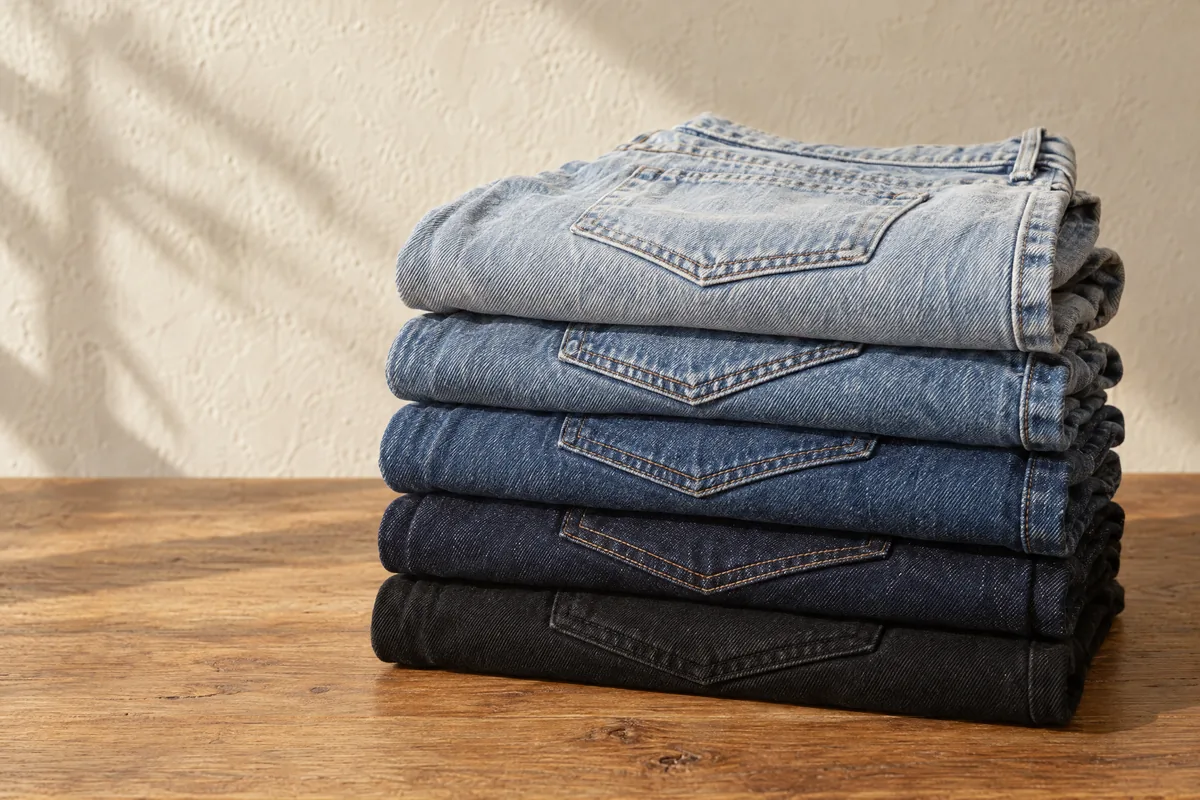
Fabric content affects how jeans feel on day one and how they behave after several hours. Cotton-rich rigid denim has structure, holds a classic shape, and often softens gradually as you wear it. Denim with stretch fibers can feel more flexible right away, which is useful for close-fitting styles and active days.
The key is matching stretch to the silhouette. A snug skinny or fitted straight jean often benefits from some recovery, meaning the fabric springs back after movement instead of sagging at the knees and seat. A relaxed or wide-leg fit may need less stretch because the pattern already provides ease.
Use this women’s jeans fit guide to look beyond the first mirror check. In a stretch pair, the waist should feel comfortably secure rather than loose at try-on, since it may relax during the day. In rigid denim, expect a close but wearable fit; you should never need to force the button closed or tolerate numbness for the sake of a break-in period.
Wash and care habits also influence longevity and fit. Turning jeans inside out, following the care label, and avoiding unnecessary heat can help preserve color and stretch recovery. Pair a structured jean with pieces from our tops and blouses collection to create outfits that feel polished without becoming overly formal.
Know the Signs of a Good Fit—and the Signs to Skip
How should jeans fit? They should feel secure at the waist, smooth across the front, comfortable through the seat, and easy to move in from the first wear. They do not need to be skin-tight to look flattering, and they do not need to feel loose everywhere to be comfortable.
Look at tension lines as helpful feedback rather than a reason to criticize your body. Strong horizontal pulling across the hips or thighs usually means the jean needs more room. Excess fabric bunching at the crotch, knees, or lower back can mean the rise, leg shape, or overall size is not working for your proportions.
This women’s jeans fit guide encourages a practical test: imagine wearing the pair for errands, lunch, commuting, or a casual evening. If you are constantly adjusting the waistband, avoiding a chair, or worrying about the hem, leave them behind. The right jeans support your day instead of demanding your attention.
Fit can also change based on styling. A front tuck, a cropped sweater, or a belt can make the waist more visible, while a longer top can create a smoother vertical line. Add personality with our accessories, but let the jeans fit well on their own before building the rest of the outfit.
- Skip jeans that require jumping, lying down, or holding your breath to fasten.
- Pass on a pair if the crotch hangs too low or pulls uncomfortably when you walk.
- Check the side seams; they should run straight down the leg rather than twisting forward or back.
- Sit for at least a minute to make sure the waistband does not sharply dig in.
- Assess the hem from every angle, especially if you plan to wear the jeans with flats and sneakers.
Style Jeans Around Proportion, Occasion, and Your Real Routine
Once you understand your preferred cut, getting dressed becomes more intuitive. This women’s jeans fit guide is not about assigning one silhouette to one body type; it is about using proportion deliberately. A close-fitting jean can balance an easy sweater, while a wide-leg jean can look crisp with a more defined top or a neatly tucked shirt.
For casual outfits, straight or relaxed denim works beautifully with simple knits, sneakers, and a light jacket. For a more elevated plan, choose dark or clean-wash denim, a refined blouse, and shoes with a pointed or streamlined toe. If you want one-piece ease, take a look at our jumpsuits and sets for a different approach to an all-in-one silhouette.
Length matters as much as leg shape. Ankle-length jeans put the focus on your footwear, while full-length straight, flare, and wide-leg pairs create a longer uninterrupted line when the hem sits just above the ground. Let the shoes you reach for most guide the inseam you choose.
The most useful women’s jeans fit guide ends with repeat wear, not a fitting-room verdict. Keep track of the rises, inseams, fabrics, and silhouettes that make you feel comfortable. Over time, those details become your personal denim blueprint—and make every future try-on faster and more successful.
- Style straight jeans with loafers, sneakers, or ankle boots for an easy day-to-night foundation.
- Pair skinny jeans with an oversized button-down or roomy knit to create contrast.
- Wear wide-leg denim with a tucked or shorter top when you want to emphasize the waist.
- Use a cropped jacket with high-rise jeans to highlight the rise without adding bulk.
- Choose your footwear before finalizing jean length, especially for flares and full-length wide-leg styles.
Where to go from here
The right pair is the one that lets you sit, move, and live comfortably while reflecting the look you want to create. Revisit this women’s jeans fit guide whenever you are comparing cuts, checking a new size, or deciding whether a trend belongs in your closet.
Start with the waist and rise, test the leg shape in motion, and pay attention to fabric and length. With those details in place, denim becomes one of the most versatile pieces you own.