A great skirt can make getting dressed feel refreshingly simple. This guide to choosing skirts breaks down the details that matter most—silhouette, waist placement, length, fabric, and styling—so you can shop with a clearer point of view.
Rather than following rigid fashion rules, use this guide to choosing skirts to notice what creates balance, movement, and confidence for you. The right choice should work with your lifestyle, feel comfortable when you sit and walk, and give you plenty of ways to rewear it.
A Guide to Choosing Skirts Starts With Fit
Fit is the foundation of every successful skirt outfit. In this guide to choosing skirts, start by checking where the waistband sits, how the fabric lays through the hips, and whether you can move naturally without tugging, pinching, or constantly readjusting. A skirt can be close-fitting without feeling restrictive, while a fuller cut should have enough ease to keep its intended shape.
Try a skirt on with the kinds of tops and shoes you actually wear. A high-rise waist can create a defined middle and lengthen the visual line of the legs, while a mid-rise or lower waist may feel more relaxed and can shift attention toward the hip area. Explore our skirt collection with fit in mind, not just the number on the tag.
Pay attention to the small construction details that influence comfort. A smooth waistband, a lining where you want coverage, functional pockets, stretch in the right place, and a hem that stays put as you walk can turn a nice-looking skirt into a true wardrobe regular.
- Stand, sit, take a few steps, and bend slightly to make sure the waistband stays comfortable.
- Check that the skirt lies smoothly at the hip rather than pulling across the front or back.
- Choose a length that lets you walk at your normal pace without catching at the knees.
- Use a half-tuck or a fitted top to test whether the waist placement feels balanced.
- If you plan to wear it often, consider whether the fabric suits your usual weather and routine.
Skirt Styles Explained: Choose a Silhouette With Purpose
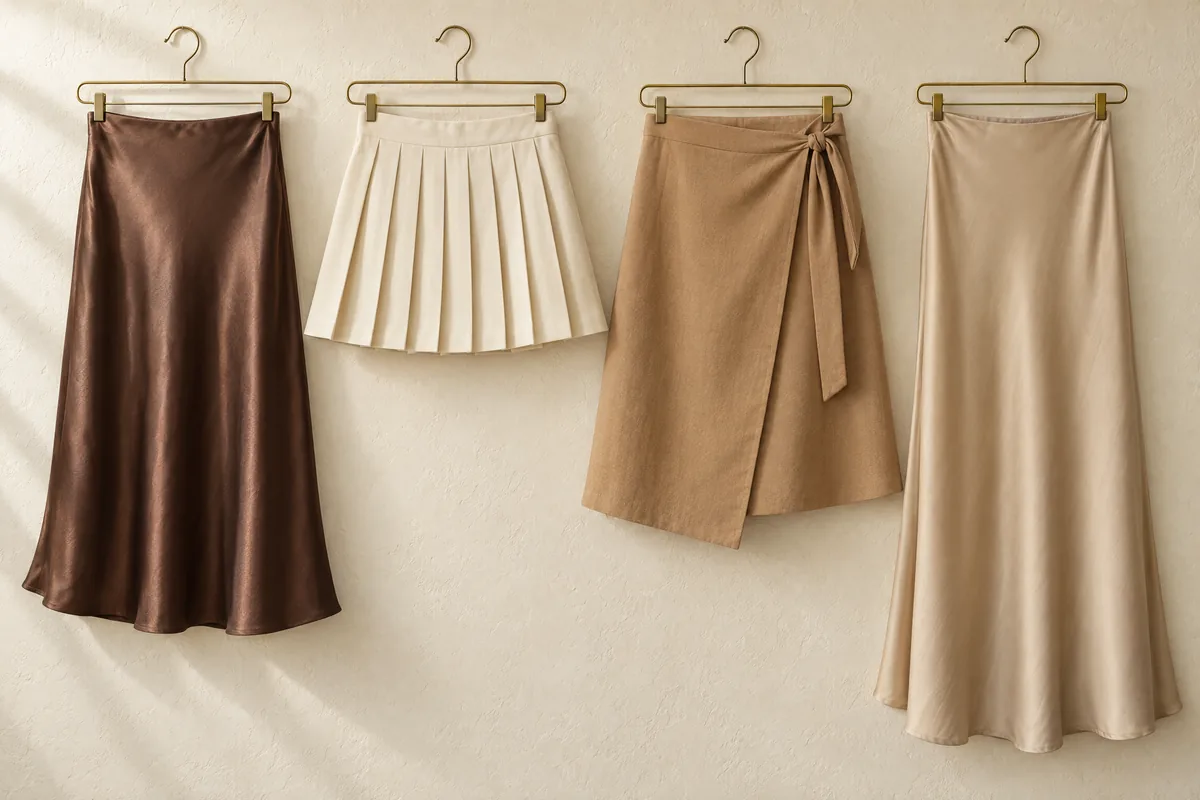
For skirt styles explained in practical terms, focus on the line each shape creates. A-line skirts skim away from the waist and offer easy movement; pencil skirts follow the body more closely; straight skirts fall in a clean vertical column; and wrap skirts allow adjustable shaping. Pleated, tiered, and circle skirts bring more volume and motion, making them natural choices when you want an expressive outfit.
This guide to choosing skirts also comes down to how much structure you prefer. A tailored straight skirt can make an easy blouse look polished, while a soft slip skirt offers a fluid contrast to crisp layers. Pair a streamlined skirt with pieces from our tops and blouses collection when you want a clear waistline, or choose a relaxed knit with a closer-fitting skirt for balance.
Think about visual weight, too. Details such as large pockets, ruffles, bold pleats, shiny fabric, or a busy print draw the eye; a smooth matte fabric and simple seam line read quieter. Neither approach is better—the goal is to choose the effect you want that day.
- Choose an A-line skirt for a defined waist with room through the hips and thighs.
- Reach for a pencil or straight skirt when you want a sleek, vertical silhouette.
- Try a wrap skirt when adjustable fit and soft movement are priorities.
- Use pleats or tiers to add dimension, then keep the top streamlined if you want balance.
- Select a slip skirt for fluid drape and an easy mix of dressed-up and casual styling.
Guide to Choosing Skirts for Your Shape and Proportions
The best skirt for your shape is the one that makes you feel at ease, not one that asks you to disguise yourself. This guide to choosing skirts can help you use proportion as a styling tool: decide whether you want to emphasize your waist, add volume, create length, or keep the whole look clean and minimal. Your personal preference should always lead.
If you enjoy definition at the waist, look for high-rise A-line, wrap, or pleated styles and pair them with a tucked-in top. If you prefer an uninterrupted line, a straight midi or a column skirt with a similarly toned top can feel elegant and uncomplicated. In this guide to choosing skirts, remember that fabric weight changes the effect just as much as the cut.
For a fuller hip area, a skirt that skims rather than clings may feel especially comfortable, while a more fitted style can be striking when balanced with an easy top or jacket. For a straighter frame, pleats, pockets, texture, or a gently flared hem can add dimension if that is the look you want. These are options, not limitations.
- Create waist definition with a high-rise skirt and a tucked, fitted, or cropped top.
- Make a long visual line with a column skirt, a similar-color top, and simple footwear.
- Balance a fuller skirt with a closer-fitting top or a neat layer that ends near the waist.
- Add visual dimension with pleats, texture, print, or pockets when you want more shape.
- Keep the outfit calm with a smooth skirt, a softly draped top, and minimal accessories.
Your Midi Skirt Guide to Length, Shoes, and Movement
A reliable midi skirt guide begins with the hem, because “midi” can fall anywhere from below the knee to near the ankle. This guide to choosing skirts recommends testing the exact length in motion. A hem that lands at a narrower part of the lower leg often creates a clean line, but the most important factor is whether the length feels natural on your body.
Shoes can completely change a midi skirt. A low-profile sneaker makes a satin, denim, or knit midi feel more casual, while a boot with a shaft that disappears under the hem can create a smooth, intentional line. For a little more visual length, try a shoe that shows some of the foot or has a pointed toe from our shoes collection.
In this guide to choosing skirts, consider the skirt's movement before committing to a midi. A narrow style may need a back slit or stretch for comfortable strides, while an A-line or pleated midi offers more room to walk. When wearing a long coat or cardigan, make sure the layers do not compete with the hemline.
- Choose a midi hem that does not interfere with your stride or catch on your boots.
- Pair a fuller midi with a shorter or more fitted top to keep the waist visible.
- Wear a close-fitting boot under a longer midi for a continuous, polished line.
- Use a sneaker with a simple profile to make a dressier midi feel everyday-ready.
- Check the skirt from the side as well as the front to see how the hem moves.
Choose Fabric and Color for Real-Life Wear
Fabric determines how a skirt feels, hangs, and holds up through a full day. In this guide to choosing skirts, lightweight cotton and linen blends bring breathability and a relaxed texture; satin and silky fabrics offer fluid drape; denim gives casual structure; and knit skirts provide softness with stretch. A fabric that matches your routine will earn more wear than one that only looks good on the hanger.
Color and print help set the versatility level. A neutral solid can become a dependable base for patterned blouses, colorful knits, and statement jewelry, while a printed skirt can do the visual work in an otherwise simple outfit. Add texture with a layer from our sweaters and knits collection, or sharpen a softer skirt with a piece from our outerwear and jackets collection.
Care is worth considering before you buy. If you need low-maintenance pieces, look for fabrics that suit your laundering habits and do not demand frequent steaming. If you love a delicate drape or special finish, decide whether you are happy to give it the extra attention it deserves.
- Pick structured denim or cotton when you want a skirt that holds a clear shape.
- Choose a fluid fabric for soft movement and an elevated feel with minimal effort.
- Use darker solids for easy repeat wear, then change the look with tops and accessories.
- Treat a bold print as the outfit focal point and keep the remaining pieces simple.
- Read care instructions before buying so the skirt fits your actual weekly routine.
Finish the Outfit and Build a Skirt Wardrobe
The final step in this guide to choosing skirts is styling around contrast and intention. A fitted skirt can look effortless with an oversized button-down, a soft sweater, or a relaxed tee, while a fuller skirt often benefits from a defined top, a partial tuck, or a cropped jacket. Accessories should support the mood rather than overwhelm it; browse our accessories collection for finishing touches that make an outfit feel personal.
Build slowly with a few silhouettes that serve different moments: perhaps one everyday casual skirt, one versatile midi, and one option that feels more polished. You do not need every style to dress well. Repeating the cuts and colors that make you feel most like yourself is how a skirt wardrobe becomes genuinely useful.
Before wearing a new outfit out, take a quick mirror check from every angle and move through your day-to-day motions. A confident look is usually the one you can forget about once you leave the house, because the fit, length, and styling are already working together.
- Start with one skirt that pairs with at least three tops you already own.
- Use a belt only when it improves comfort or adds a clear point of definition.
- Balance an oversized top with a sleeker skirt, or balance a fuller skirt with a neater top.
- Repeat colors between your skirt, shoe, bag, or jacket for a pulled-together finish.
- Choose accessories after the silhouette is set so they enhance rather than distract from the outfit.
Where to go from here
The most useful guide to choosing skirts is one that helps you notice your own preferences. Prioritize a comfortable fit, a length you can move in, and styling options that fit your real life, then let the silhouette and details express your mood.
When you want to try pieces on in person, visit Pieces of a Dream at 2448 Central Ave, St Petersburg, FL 33712. A thoughtfully chosen skirt can be one of the hardest-working pieces in your closet.