Knowing how to measure your body for clothing takes much of the guesswork out of getting dressed. A few accurate numbers can help you compare size charts, recognize which silhouettes suit your proportions, and shop online with a clearer idea of fit.
This body measurement guide focuses on the measurements that matter most for women’s clothing, plus simple techniques that keep your results consistent. Save your numbers in your phone and update them whenever your fit preferences or wardrobe needs change.
What You Need Before You Measure
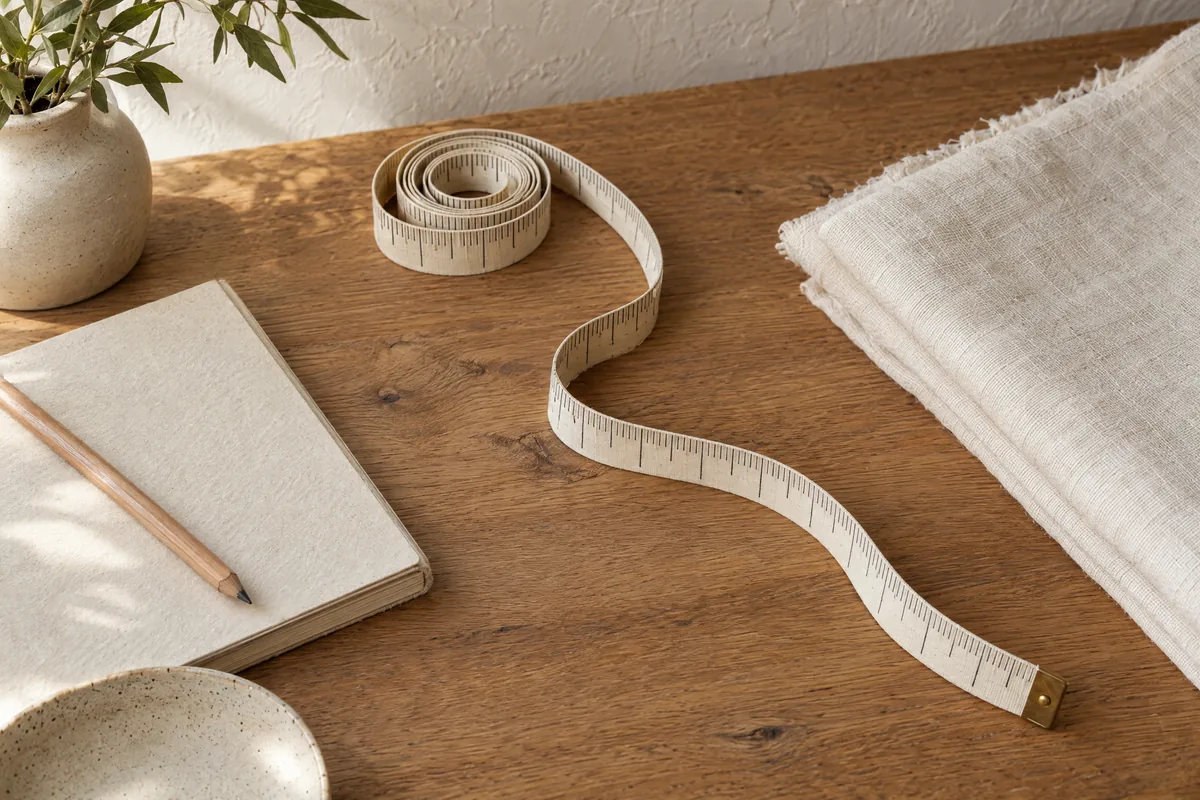
Before learning how to measure your body for clothing, gather a soft, flexible measuring tape. A fabric tape is best because it follows the body without digging in; if you do not have one, use a non-stretch string, then lay it flat against a ruler or yardstick.
Wear close-fitting clothing, such as leggings and a fitted tank, or measure over underwear. Thick sweaters, jeans, and bulky layers add inches and can make a size chart seem less accurate than it is. Stand naturally with your weight balanced on both feet, and ask a friend to help with harder-to-reach measurements when possible.
Measure without pulling the tape tight enough to compress skin or leaving it loose enough to droop. The right tension is comfortably snug and parallel to the floor. Take each measurement twice; when the numbers differ, use the larger number for a more comfortable everyday fit.
As you shop, keep the garment category in mind. The measurements you need for our dress collection may differ from the details that matter most for jeans, trousers, or outerwear.
- Use a flexible tape marked in inches and read it with the tape lying flat against your body.
- Measure in front of a mirror so you can check that the tape is level at the back and sides.
- Keep your normal bra on when measuring bust, especially if you plan to shop fitted tops or dresses.
- Breathe normally and avoid holding your stomach in, since clothing needs to fit your real posture.
- Record the date beside your measurements so you know when it is time to recheck them.
How to Measure Your Body for Clothing: Core Measurements
The most useful answer to how to measure your body for clothing starts with bust, waist, and hips. These three numbers appear on most women’s size charts and provide a reliable baseline for dresses, tops, skirts, and many one-piece styles. Write them down exactly rather than rounding to a preferred size.
Measure your bust around the fullest part of your chest, with the tape straight across your back. Keep your arms relaxed at your sides. For a structured bodice or a close-fitting blouse, the bust measurement is often the number that determines whether you should move up a size.
Find your natural waist by bending gently to one side; the crease that forms is generally your natural waistline. Stand straight again and measure around that point, usually above the navel and below the rib cage. Do not confuse this with the waistband position of a high-rise or low-rise garment.
For hips, place the tape around the fullest part of your seat and hips, often seven to nine inches below your natural waist. Look sideways in a mirror to make sure the tape has not risen across the back. This is especially important when choosing skirts, body-skimming dresses, and fitted pants.
For many shoppers, how to take your measurements becomes easier when each number is paired with a brief note: for example, “prefer relaxed waist” or “need room through hips.” Measurements tell you the starting point; your preferred ease tells you how you want the finished garment to feel.
- Bust: measure around the fullest part of the chest while keeping the tape level across the shoulder blades.
- Natural waist: measure at the narrowest part of your torso, not automatically at the top edge of your pants.
- Hips: measure around the fullest point of the hips and seat with your feet close together.
- High hip: measure around the upper hip area about three to four inches below the waist for some tailored skirts and pants.
- Torso: run the tape from the top of one shoulder, down through the legs, and back to the starting point when assessing one-piece fits.
How to Measure Your Body for Clothing for Pants and Jeans
When figuring out how to measure your body for clothing below the waist, add inseam, rise, and thigh to your core numbers. These measurements explain why a pair of pants may fit at the waist but feel short, restrictive, or uneven elsewhere. They are particularly useful when comparing different cuts and rises online.
To measure inseam, start at the crotch seam and run the tape down the inside of the leg to the point where you want the hem to land. For the most accurate result, measure a pair of pants you already love while it is laid flat, then compare that inseam with the product details. Consider the shoes you expect to wear, since a cropped trouser and a full-length jean need different finishing points.
For rise, measure from the center front waistband, through the legs, to the center back waistband on a garment you own. Rise is usually supplied as a garment measurement rather than a body measurement, but knowing what feels comfortable helps you interpret it. A high rise reaches closer to the natural waist, while a lower rise sits farther below it.
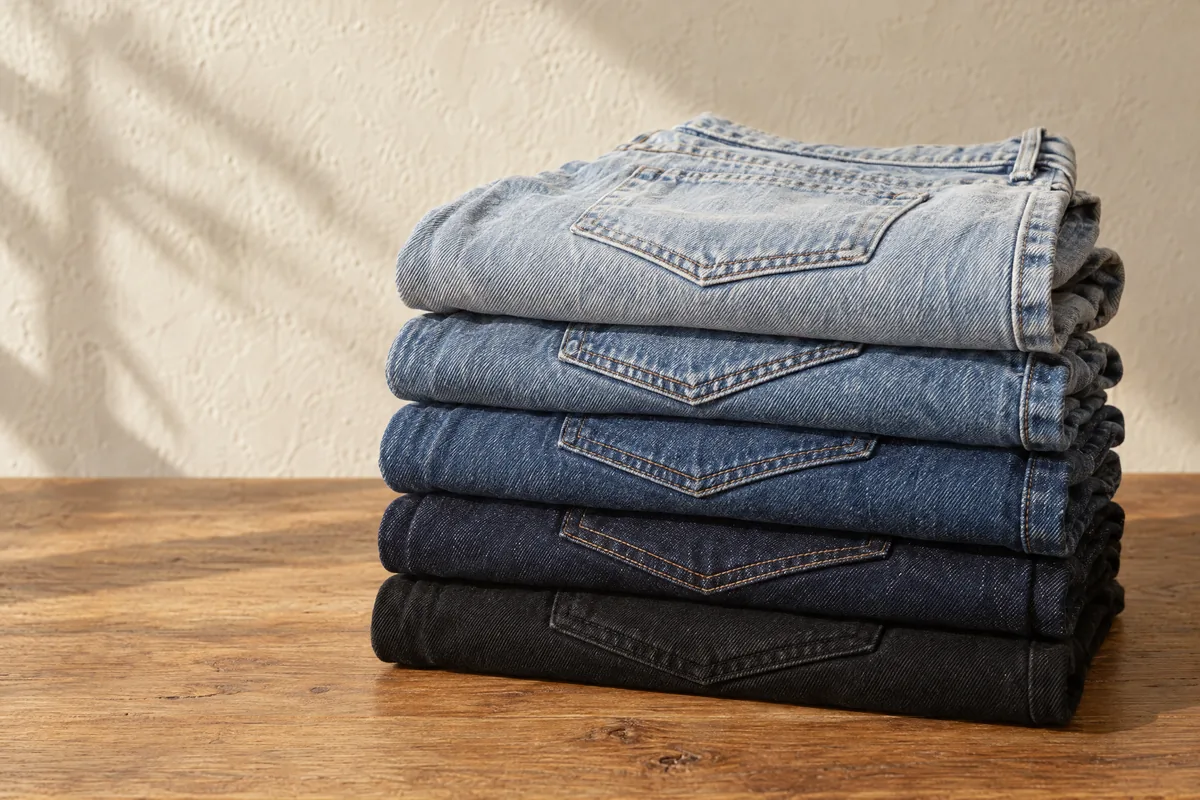
Measure your thigh around its fullest point, usually just below the crotch. This number is helpful for slim-cut styles, tailored trousers, and denim with little stretch. Browse jeans and denim with both your hip and thigh measurements in mind, rather than relying on a single familiar size.
If your waist and hips fall into different sizes, choose according to the least-forgiving area of the garment. For non-stretch trousers, that is often the hips or thighs; for an adjustable or elastic waist, you may have more flexibility. Reading the fabric description and silhouette notes alongside the chart supports better online clothing sizing.
- Inseam: measure from the crotch seam to your preferred hem length along the inside of the leg.
- Thigh: wrap the tape around the fullest part of the upper thigh without tightening it.
- Preferred rise: compare the front rise of a favorite pair with the rise listed for a new style.
- Calf: measure the fullest part of the calf when considering slim boots, narrow trousers, or close-cut denim.
- Outseam: measure from the waistband to the hem along the outer leg when you want to compare overall length.
Measure Shoulders, Sleeves, and Length for Tops and Layers
How to measure your body for clothing above the waist depends on whether you like a close fit, a relaxed fit, or room for layering. Bust is the main starting point, but shoulder width, arm length, and preferred body length can make a major difference in shirts, blazers, cardigans, and jackets.
For shoulder width, measure across your back from the outer edge of one shoulder bone to the other. Keep the tape straight rather than curving it around the shoulders. This is especially useful for woven shirts and structured layers, where a shoulder seam that sits too far inward can limit movement.
Measure sleeve length from the shoulder point down to the wrist with your arm slightly bent. If you are measuring a garment you already own, start at the shoulder seam and follow the sleeve to the cuff. For tops and blouses, compare both the sleeve details and the overall length with the pieces you wear most often.
To find your preferred top length, measure from the high point of the shoulder near the neck to where you want the hem to end. A cropped top, tunic, and standard tee can all have the same bust measurement while delivering entirely different coverage. The same idea matters when selecting outerwear and jackets that need room over other pieces.
If you have a fuller bust or broad shoulders, do not assume a larger size will solve every fit issue. Look for details such as stretch, dropped shoulders, button placement, and a relaxed cut. How to take your measurements is only one part of fit; garment construction and the amount of intended ease matter, too.
- Shoulder width: measure from shoulder bone to shoulder bone across the back, keeping the tape straight.
- Sleeve length: measure from the shoulder point to the wrist with a slight bend in your elbow.
- Upper arm: measure around the fullest part of the bicep for fitted sleeves and non-stretch jackets.
- Top length: measure from the high shoulder point to your preferred hem position.
- Neck: measure loosely around the base of the neck when comparing collared or close-neck styles.
Use This Body Measurement Guide With Size Charts
A good body measurement guide does not replace a size chart; it gives you the information to use one well. Every style can fit differently, so check the chart and product description each time instead of assuming your usual letter size will be identical across dresses, pants, and knitwear.
First, confirm whether the chart lists body measurements or garment measurements. Body measurements tell you the body range the item is designed to fit. Garment measurements describe the finished piece itself, so you need to allow enough room for movement, underlayers, and the intended silhouette.
When your numbers land between sizes, consider fabric and fit before deciding. Stretch knitwear may offer more flexibility, while a lined woven dress or tailored pant may call for more room. For an oversized sweater, selecting your usual size may preserve the intended drape; for a fitted non-stretch piece, choosing the size that accommodates your fullest measurement is often wiser.
Online clothing sizing is more reliable when you compare a new item with a favorite garment from your closet. Lay that garment flat and measure the bust, waist, hip, rise, or length that matters, then compare those dimensions with available product information. This practical check helps translate numbers into a fit you can picture.
Knowing how to measure your body for clothing also helps you shop a complete outfit thoughtfully. A defined-waist jumpsuit may need a torso check, while a coordinated set lets you assess top and bottom fit separately; explore jumpsuits and sets with those details in mind.
- Read the fit description first to identify whether the piece is designed to be fitted, relaxed, oversized, cropped, or full length.
- Compare your fullest relevant body measurement with the chart before using your usual letter or numeric size.
- Choose for the bust, hips, or thighs first when the fabric has limited stretch, then assess whether the waist is adjustable.
- Use garment measurements to compare an item with a similar piece that already fits the way you like.
- Keep a note of successful fits by category, since your preferred size can differ among denim, dresses, and sweaters.
Recheck Measurements and Shop With More Confidence
Once you know how to measure your body for clothing, save a simple profile with bust, waist, hips, inseam, shoulder width, and preferred lengths. This makes future shopping faster and helps you notice which numbers you actually use most. You do not need to measure before every purchase, but checking every few months or before buying a special-occasion piece is sensible.
Re-measure after meaningful changes in your body, activity level, or fit preferences, and whenever an old number suddenly seems unreliable. Measurements are neutral information, not a judgment. Their purpose is to help you select clothing that lets you move, sit, and feel like yourself.
For final decision-making, think beyond the tape. Consider where you want a waistband to sit, whether you will layer underneath, how much stretch you enjoy, and the shoes you plan to wear. Pair your measurements with the item’s silhouette, then review the details before adding it to your wardrobe.
If you want to see pieces in person, visit Pieces of a Dream at 2448 Central Ave, St Petersburg, FL 33712, or browse new arrivals when you are ready to put your measurements to use. With a current set of numbers and a clear sense of your preferred fit, online clothing sizing becomes a more informed, more enjoyable part of shopping.
- Update your saved measurements when a favorite silhouette begins fitting differently than expected.
- Keep separate notes for your preferred dress length, inseam, and sleeve length to speed up future comparisons.
- Factor in shapewear, bras, and layers only when you expect to wear them with the item you are measuring for.
- Try a seated test at home with similar garments if comfort through the waist, hips, or thighs is a priority.
- Use your measurements as a guide, then choose the fit and ease that make you feel most comfortable.
Where to go from here
Learning how to measure your body for clothing gives you a practical foundation for choosing sizes with less uncertainty. Start with bust, natural waist, and hips, then add the category-specific numbers that matter for the pieces you wear most.
Keep your measurements current, compare them with each item’s chart, and leave room for your personal fit preference. That combination turns a basic measuring tape into one of the most useful tools in your closet.