The history of denim jeans is bigger than one famous pair of pants. It is a story of sturdy cloth, practical problem-solving, American labor, youth culture, and a garment that became a reliable part of wardrobes around the world.
Understanding the history of denim jeans makes shopping and styling more intentional. A straight leg, wide leg, dark wash, or faded finish can all reference a different chapter in denim’s past—while still feeling completely current.
The History of Denim Jeans Begins With Durable Cloth
Before jeans existed, denim and jean cloth were associated with durable workwear. “Denim” is widely linked to a sturdy twill fabric connected to Nîmes, France, while the word “jeans” is tied to hard-wearing cotton trousers associated with Genoa, Italy. The exact language and trade routes are more complicated than a single origin story, but both terms point to cloth made for labor rather than luxury.
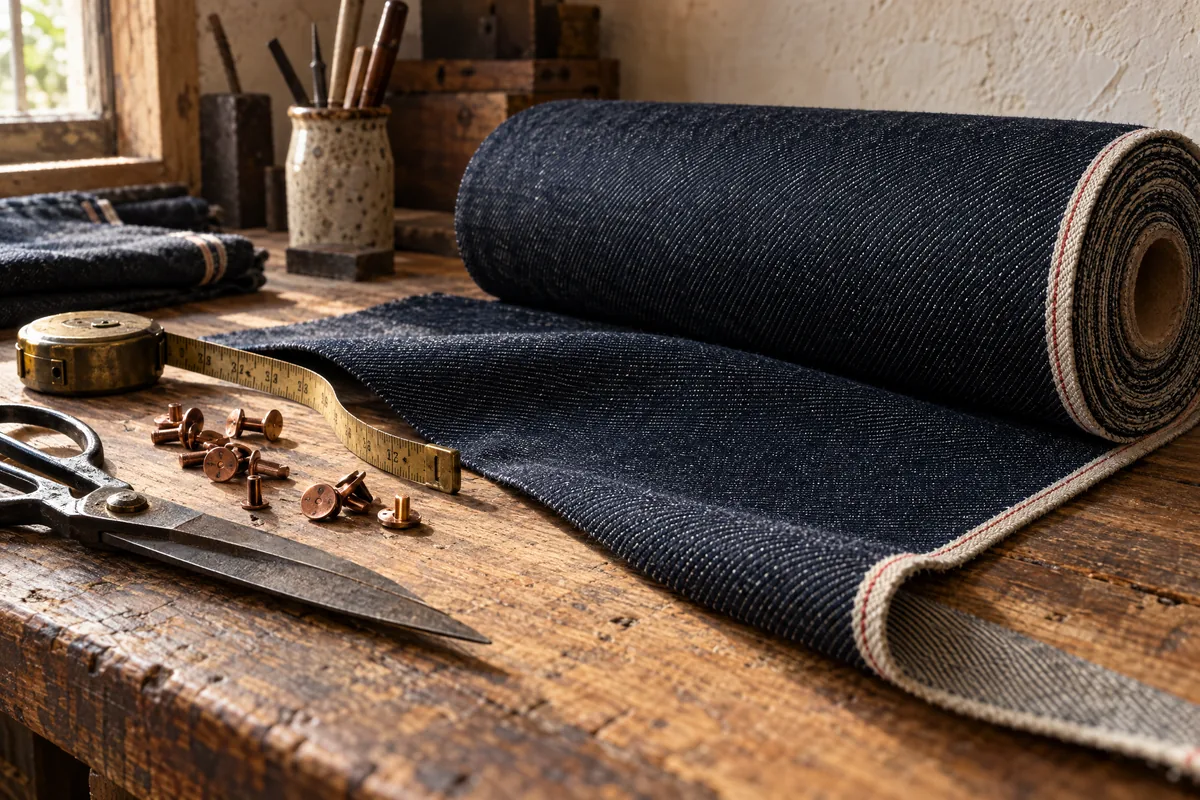
The defining feature of denim is its twill weave, which creates the familiar diagonal ribbing. Traditionally, the warp threads were dyed with indigo while the weft threads remained light, producing blue cloth with a paler interior. That construction is why denim develops contrast and character as it is worn and washed.
In the early history of denim jeans, toughness mattered most. Workers needed trousers that could handle dust, tools, movement, and frequent wear, and cotton twill offered a practical answer. The fabric was useful long before it became a fashion statement.
Indigo also helped set denim apart visually. Because indigo sits close to the surface of the yarn rather than fully penetrating it, color gradually rubs away in high-contact areas. That fading process gave each pair a personal look long before distressed finishes were designed on purpose.
- Denim’s diagonal twill lines are a quick way to recognize the fabric’s classic construction.
- Indigo-dyed warp yarns and lighter weft yarns create denim’s signature blue face and pale reverse side.
- Natural fading often appears first at the knees, thighs, hems, and pocket edges because those areas receive the most friction.
- A darker wash generally reads more polished, while a lighter wash highlights denim’s casual, lived-in character.
Who Invented Jeans? The Riveted Workwear Breakthrough
The best answer to who invented jeans names two people: Levi Strauss, a dry-goods businessman, and Jacob Davis, a tailor. Davis had the practical idea to reinforce stress points on work trousers with copper rivets after seeing that pockets and seams often tore under the strain of physical work.
Davis needed a business partner to help secure the idea, and the two men received a U.S. patent for riveted work pants in 1873. That date is often treated as the official birth of blue jeans, because it marks the patent for the reinforced construction that distinguished these trousers from earlier work pants.
This moment is central to the history of denim jeans because it joined fabric, function, and construction in one durable garment. Rivets were placed at pocket corners and other points where fabric pulled hardest, making the pants more dependable for laborers, miners, ranchers, and tradespeople.
Early jeans were not created to chase trends. Their appeal came from utility: strong seams, generous pockets, and a fabric that could withstand demanding work. Yet that same straightforward design later gave fashion a timeless foundation to reinterpret.
- The 1873 patent covered the use of metal rivets to strengthen stress points on work trousers.
- Pocket corners were especially important because tools, coins, and repeated movement could pull seams apart.
- The original idea solved a practical durability problem rather than introducing a decorative detail.
- When considering who invented jeans, remember that the invention was a collaboration between a tailor’s solution and a business partner’s support.
A Denim History Timeline: From Labor to Leisure
A useful denim history timeline shows that jeans did not become a universal casual staple overnight. In the late nineteenth century, they were primarily associated with physically demanding work. Their reputation for resilience traveled with the people who wore them, especially in agricultural, industrial, and western settings.
By the 1930s, denim had entered leisure imagery as visitors to ranches and rural destinations adopted the look for recreation. The evolution of blue jeans was underway: clothing made for work began to signal independence, outdoor life, and a less formal way of dressing.
During the 1940s, material restrictions and wartime production shaped clothing choices, while jeans remained connected to utility. In the decades that followed, film, music, and youth culture transformed them into symbols of individuality and nonconformity. A pair of jeans could now communicate attitude as clearly as practicality.
The later twentieth century expanded the silhouette choices dramatically. Slim fits, flares, high rises, relaxed legs, and low rises each had their moment, proving that denim could adapt to changing ideas about proportion and personal style.
- Late 1800s: riveted denim trousers gained traction as dependable workwear.
- 1930s: denim became more visible as leisure clothing with western and outdoor associations.
- 1950s and 1960s: jeans became closely linked to youth identity and casual self-expression.
- 1970s onward: changing rises and leg shapes made denim a major vehicle for fashion cycles.
- Today: classic cuts and trend-driven silhouettes coexist, giving shoppers more ways to make denim their own.
The History of Denim Jeans in American Style
The history of denim jeans became inseparable from American style because jeans could move between real life and cultural imagination. They appeared on workers, students, artists, musicians, and people simply looking for clothes that felt easy to wear. Few garments have been able to look rugged, relaxed, and expressive at the same time.
As dress codes loosened over the twentieth century, denim moved from weekends into more everyday settings. A clean, dark pair could feel neat enough for casual offices or dinner plans, while a faded pair carried a more off-duty mood. The evolution of blue jeans was not about replacing every other garment; it was about becoming the piece that could connect many kinds of outfits.
Designers and wearers also kept changing the details: washes, hems, pocket placement, rise, stretch, and leg shape. Those choices can subtly alter how a pair feels and how it balances the rest of an outfit. That is why the history of denim jeans remains relevant whenever a familiar silhouette returns with a new perspective.
For an easy modern starting point, browse our jeans and denim collection with an eye toward fit first, then wash. The most versatile pair is usually the one that works with the tops and shoes you already reach for.
The Evolution of Blue Jeans: Fits, Finishes, and Fabric
The evolution of blue jeans is often told through leg shapes, but fabric technology matters too. Early denim was typically rigid and substantial, softening through repeated wear. Contemporary denim may include a small amount of stretch, which can change recovery, comfort, and the way a silhouette follows the body.
Straight-leg jeans offer a clean line with roots in classic workwear, while wide-leg and relaxed fits create more movement and volume. High-rise cuts can emphasize the waist, and mid-rise cuts can provide an easy, balanced proportion. These are not rules, but they are useful starting points when selecting a pair.
Finishes tell another chapter in the history of denim jeans. Raw or dark indigo looks crisp and can develop its own wear pattern, while medium and light washes arrive with a more relaxed appearance. Whiskering, fading, frayed hems, and distressed details reference the visual effects of long wear, even when they are applied intentionally.
To make jeans feel considered rather than costume-like, balance their casual history with the rest of your look. Pair a structured blouse with a relaxed leg, or use a simple knit to soften a sharper, darker wash. Explore tops and blouses, sweaters and knits, and shoes to build outfits around the denim you love.
- Choose a straight leg when you want a classic shape that works with flats, sneakers, boots, or a low heel.
- Try a wide leg with a more fitted top or a tucked-in blouse to define the waist and maintain balance.
- Select a dark wash for a cleaner, more versatile look that can transition from daytime plans to an evening out.
- Choose lighter washes when you want denim to feel casual, especially alongside relaxed layers or warm-weather pieces.
- Check the fabric composition and fit notes because rigid and stretch denim can feel very different in the same labeled size.
Why the History of Denim Jeans Still Matters Today
The history of denim jeans matters because it explains the garment’s rare staying power. Jeans have survived changing trends not by remaining exactly the same, but by offering a dependable base for new fits, new styling ideas, and new ways of living. Their original purpose—clothes that can be worn often and move with life—still feels relevant.
When you shop denim now, think beyond a passing trend. Consider where you will wear the pair, which shoes you prefer, whether you like a defined waist, and how much structure feels good on your body. The evolution of blue jeans gives you permission to choose what suits your routine instead of chasing a single “right” silhouette.
A thoughtful denim wardrobe does not need to be complicated. One darker pair, one relaxed everyday option, and a favorite top layer can create a wide range of looks. Add a jacket from our outerwear collection for dimension, or use accessories to shift a simple jeans-and-top outfit toward your own style.
The history of denim jeans also encourages better care. Wash only when needed, turn pairs inside out, use cooler water when appropriate, and follow the garment label. Gentler care can help preserve color, shape, and the details that make a favorite pair feel like yours.
Where to go from here
From indigo twill and riveted work pants to the countless silhouettes worn today, the history of denim jeans is a history of adaptation. Its most lasting lesson is simple: denim works best when it supports your real life and expresses your personal point of view.
Whether you favor a classic straight leg, a relaxed fit, or a bolder wide-leg shape, let the history of denim jeans inform your choices without limiting them. The right pair is the one you will wear, style, and enjoy again and again.