Knowing how to care for satin and silk helps your favorite pieces keep their graceful drape, smooth finish, and rich-looking color. These fabrics deserve a little more attention than everyday cotton, but the routine is manageable once you understand what the label and the fabric are telling you.
The most important distinction is simple: silk is a natural fiber, while satin is a weave with a glossy face and duller back. Satin may be made from silk, polyester, acetate, or another fiber, so how to care for satin and silk always starts with checking the garment’s fiber content and care instructions—not relying on appearance alone.
How to Care for Satin and Silk: Start With the Care Label
Before washing, look for the fiber content, cleaning symbols, lining information, and warnings such as “dry clean only.” A silk blouse with a washable label may tolerate gentle hand-washing, while a satin dress with acetate content or structured construction may be safer with professional care. The label is the best instruction for the particular garment in your hands.
Also consider the details, not just the main fabric. Beading, pleats, leather trim, bonded seams, padding, vivid prints, and delicate lace can all change the right cleaning method. For a special-occasion piece from our dress collection, taking a quick photo of the care label before its first cleaning is an easy habit that saves uncertainty later.
When in doubt, test a hidden seam allowance with a drop of water and a white cloth. If dye transfers, the spot darkens unevenly, or the finish changes, do not proceed with home washing. Choose professional cleaning or contact a cleaner who routinely handles delicate garments.
- Read both the fiber-content tag and the care tag, because “satin” describes a weave rather than a fiber.
- Treat “dry clean only” as a firm instruction, especially on lined, tailored, embellished, or pleated clothing.
- Separate pale, dark, and intensely dyed pieces before any home washing to limit color transfer.
- Remove belts, detachable pins, and jewelry before cleaning so they cannot snag the fabric.
- Empty pockets and fasten hooks or zippers to prevent abrasion during handling.
Washing Silk Clothes by Hand Without Damaging the Fibers
For washable silk, hand-washing is usually the gentlest choice. Use a clean basin filled with cool water and a small amount of detergent formulated for delicates; regular heavy-duty detergent can leave fibers feeling rough or strip color over time. Turn the item inside out first, particularly printed blouses, camisoles, and lightweight pieces from our Tops & Blouses collection.
Submerge the garment and move it through the water slowly for just a few minutes. Do not scrub, twist, or let silk soak for a long time. Focus on moving the water around the fabric rather than rubbing the fabric against itself, which can create friction marks and weaken fine areas.
Rinse in cool water until the water runs clear. Support the garment with both hands as you lift it out, because wet silk is heavier and more vulnerable to stretching. Press out excess water gently between your palms, then lay it flat on a clean white towel, roll the towel, and press to absorb moisture.
Machine washing is only appropriate when the label specifically permits it. If it does, use a mesh bag, cold water, a delicate cycle, and low spin; wash with similarly lightweight items only. This approach to washing silk clothes keeps unnecessary movement and snags to a minimum.
- Use cool water, since heat can affect dye, shrinkage, and the feel of delicate fibers.
- Choose a mild liquid detergent for delicates and use only the recommended small amount.
- Never use chlorine bleach, enzyme-heavy stain products, or fabric softener on silk.
- Avoid rubbing a stain with a brush, washcloth, or your fingernails.
- Rinse thoroughly, because leftover detergent can dull silk’s natural sheen.
Satin Garment Care Depends on What the Satin Is Made Of
Thoughtful satin garment care begins with identifying the fiber. Polyester satin is often more durable and may be machine-washable on a delicate setting, while silk satin needs the gentler handling described above. Acetate satin can be especially sensitive to water, heat, and rubbing, so a dry-clean-only label should be respected without exception.
To hand-wash a washable satin item, use cool water and a delicate detergent, then swish it briefly rather than agitating it. Keep the garment inside out to protect the shiny face from contact with zippers, rough basin surfaces, and other fabrics. Wash it alone or with very soft, similarly colored items.
Be cautious with spot cleaning. Water can sometimes leave a ring or alter the luster of satin, particularly on dark colors. Blot a fresh spill immediately with a clean white cloth, work from the outside of the mark inward, and test any cleaner on an inconspicuous area before using it more broadly.
For satin trousers, slip dresses, or matching pieces, clean coordinating items at the same time when the label allows. It helps avoid subtle differences in color or finish after repeated wear. Browse our Pants & Trousers collection with the same label-first mindset when building a wardrobe of polished fabrics.
- Keep satin away from rough towels, unfinished wood, hook-and-loop fasteners, and sharp jewelry.
- Blot spills right away instead of pressing them deeper into the weave.
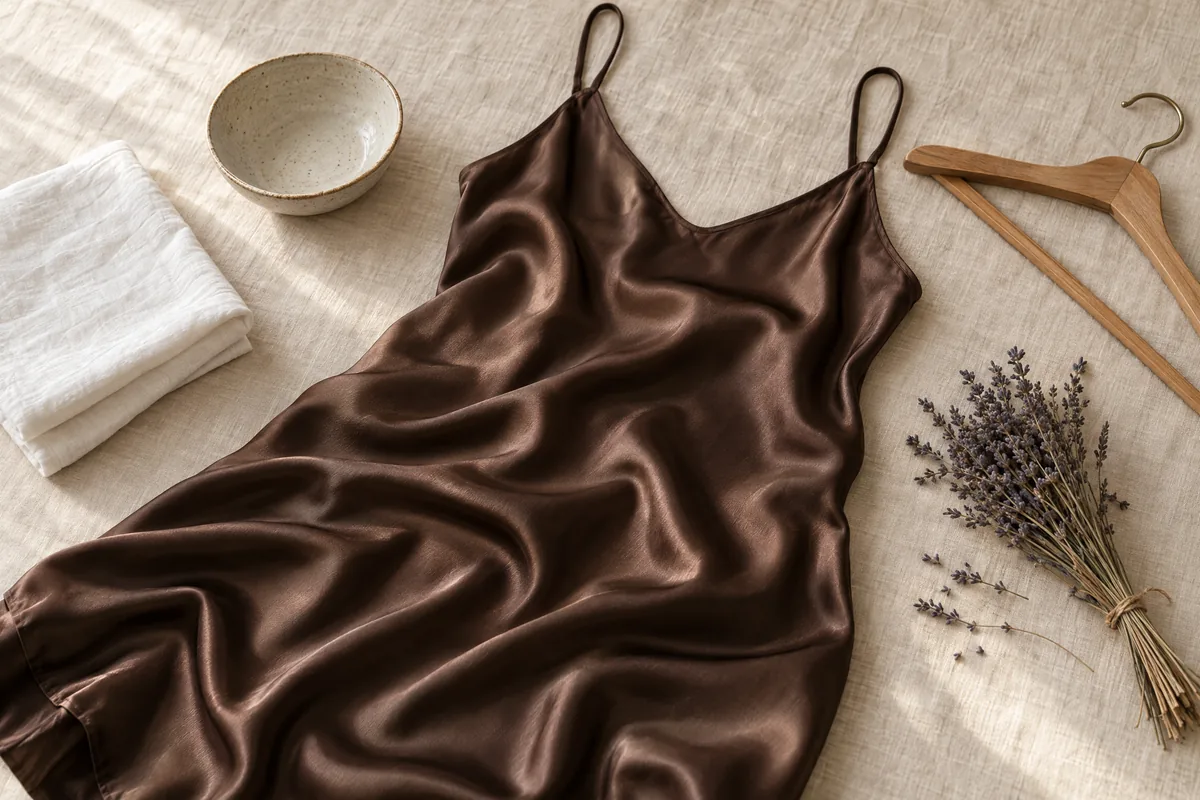
- Use a padded hanger for washable satin blouses and dresses after they are fully dry.
- Wash a satin set together when possible so one piece does not fade faster than the other.
- Skip the dryer unless the label explicitly permits it, because heat can damage fibers and set wrinkles.
How to Care for Satin and Silk When Dry Cleaning Is Best
A reliable dry cleaning silk guide starts with knowing when home care is not worth the risk. Professional cleaning is the better route for garments labeled dry clean only, silk with complex embellishment, vintage pieces, tailored jackets, heavily lined items, and anything with a stain that has dried or set. It is also wise for light-colored silk after an oil-based spill, since home treatment can spread the mark.
Before dropping off an item, point out every stain and say what caused it if you know. Makeup, perfume, wine, oil, and ink may require different treatment, and early details help the cleaner choose an appropriate process. Avoid applying multiple home remedies first; mixing products can make stains harder to remove and can permanently affect color.
Use a breathable garment bag for transport rather than sealing the piece in plastic. If the item has a belt, sash, or matching separate piece, bring it along so all components receive comparable care. For a structured layer from our Outerwear & Jackets collection, professional care is particularly sensible when the garment has shape, lining, or specialty trim.
After cleaning, remove long-term plastic wrapping once you are home. Plastic can trap moisture and restrict airflow, while breathable storage helps fabric remain fresh between wears. Keep the receipt or note the cleaner’s method if you want a useful reference for future care.
- Choose professional cleaning for dry-clean-only labels, intricate construction, and garments with attached embellishments.
- Tell the cleaner about stains before handing over the garment, including when the stain occurred.
- Do not iron over an unremoved stain, because heat can make it more difficult to lift.
- Bring matching components together, including a sash, belt, or coordinated skirt.
- Take cleaned silk and satin out of disposable plastic before storing them for an extended period.
Drying, Steaming, and Pressing Delicate Pieces
Air-drying is the safest default after washing silk clothes or washable satin. Reshape the item while it is damp, smoothing seams, collars, and hems with clean hands. Lay knit silk flat to dry, and either lay woven garments flat or hang them only when they are light enough that their weight will not pull the shoulders or neckline out of shape.
Keep delicate clothing out of direct sun, away from radiators, and clear of bathroom humidity. Sunlight can fade color, while high heat can shrink natural fibers, damage synthetic satin, or leave a change in sheen. Give each piece enough space for air to circulate so it dries evenly.
For wrinkles, a steamer is often the easiest option. Hang the garment with room around it, turn it inside out when practical, and hold the steamer a short distance away rather than pressing the nozzle into the fabric. Let the item cool and dry fully before wearing or putting it away.
If the label permits ironing, use the lowest suitable setting and press on the wrong side through a clean pressing cloth. Move the iron continuously and avoid steam directly on satin’s glossy face, which can leave water marks or shine changes. This careful finish is a core part of how to care for satin and silk for a polished look.
- Dry silk and satin away from direct sun, heaters, and hot-air vents.
- Use a clean white towel for flat drying to avoid dye transfer from colored towels.
- Steam from a slight distance and test an inside seam before treating a visible area.
- Iron inside out with a pressing cloth when the label allows it.
- Allow a freshly steamed or pressed garment to cool completely before folding or hanging it.
How to Care for Satin and Silk in Storage and Between Wears
Proper storage reduces how often delicate clothes need cleaning. Hang woven silk blouses, dresses, and satin pieces on smooth padded or wide hangers, leaving enough room so the garments do not rub together. Fold silk knits rather than hanging them, since gravity can stretch shoulders and distort their shape over time.
Choose a cool, dry, dark closet and use breathable cotton garment bags for especially delicate pieces. Avoid wire hangers, rough storage bins, and long-term plastic covers. For embellished eveningwear or dressy jumpsuits and sets, placing a layer of acid-free tissue between folds can help prevent creasing and surface friction.
Between wears, air out a garment for several hours before returning it to the closet. This is usually better than washing after every short wear, provided the item is clean and odor-free. Spot attention to the neckline, underarms, and hems can prevent a minor mark from becoming a larger cleaning project.
Keep perfume, hairspray, deodorant, and body lotion away from the fabric until they are fully dry on your skin. These products can leave marks, especially on satin’s smooth surface. With these everyday habits, how to care for satin and silk becomes less about rescue cleaning and more about preserving what you love.
- Use padded, broad, or smoothly covered hangers instead of wire hangers for woven pieces.
- Fold silk knits with tissue at stress points instead of hanging them by the shoulders.
- Store delicate garments in a dark, dry area with breathable fabric protection.
- Air a garment out after wearing before returning it to the closet.
- Keep cosmetics and fragrance from contacting the fabric, and dress after products have dried.
Where to go from here
The best approach to how to care for satin and silk is consistent, gentle prevention: read the label, keep water cool, reduce friction, avoid heat, and seek professional help for delicate construction or difficult stains. A few careful minutes before washing, drying, or storing can protect the finish and fit that made you choose the piece in the first place.
When you are ready to add another polished staple to your rotation, explore Shop All or visit Pieces of a Dream at 2448 Central Ave, St Petersburg, FL 33712.